

The Age of Metals
p1≈ –2 500 à –600 av. J.-C.
🔥 The Bronze Revolution (–2,500 to –800)
After millennia of shaping and polishing stone, humanity discovered the secret of alloys. By combining copper and tin, craftsmen created bronze.
This was a major technological breakthrough:
- Bronze is harder than pure copper
- It can be melted and cast into complex shapes
- Tools and weapons became more efficient and repairable
.jpg?width=512)
Bronze Age sword (National Archaeology Museum).
💎 A society of prestige and trade
Bronze required tin, a rare metal. To obtain it, populations in France developed vast trade networks:
- Tin came from mines in Brittany or Cornwall
- Amber arrived from the Baltic Sea
- Salt and textiles were exchanged across the territory
This economy gave rise to a new social class: a warrior aristocracy. For the first time, certain leaders accumulated immense wealth and were buried with magnificent treasures.
🛠️ The arrival of iron (from around –800)
Around 800 BCE, a new technology spread from Central Europe: the mastery of iron.
More abundant than bronze but harder to work (requiring very high temperatures), iron would democratize the use of metal. Tools for agriculture and powerful weapons became more widely accessible.
%2C_mus%C3%A9e_Vivenel%2C_vitrine_Champlieu%2C_armes_et_outils_en_fer_gaulois.jpg?width=512)
Gallic iron weapons and tools (Musée Vivenel, Compiègne).
👑 The Lady of Vix: a unique treasure
One of the most spectacular testimonies of this period in France is the tomb of the Lady of Vix (Burgundy, around –480).
This high-status woman was buried with an extraordinary treasure:
- A solid gold torque
- A ceremonial chariot
- The famous Vix Krater, the largest known bronze vessel from ancient Greece
🔍 Zoom – The Treasure of the Lady of Vix
.jpg?width=512)
The Vix Krater, a bronze masterpiece made around 530 BCE.
🛡️ The emergence of the Celts
It is during this period that the identity of the Celts (later called Gauls by the Romans) took shape. They built fortified settlements on hilltops, known as oppida, and developed a refined artistic style based on curves and interlacing patterns.
🔍 Zoom – The Oppidum: the birth of the first towns

Celtic gold torque discovered in Heerlen.
🔍 Zoom – The Torque: jewelry, divinity, and power
🔥 The secret of metal
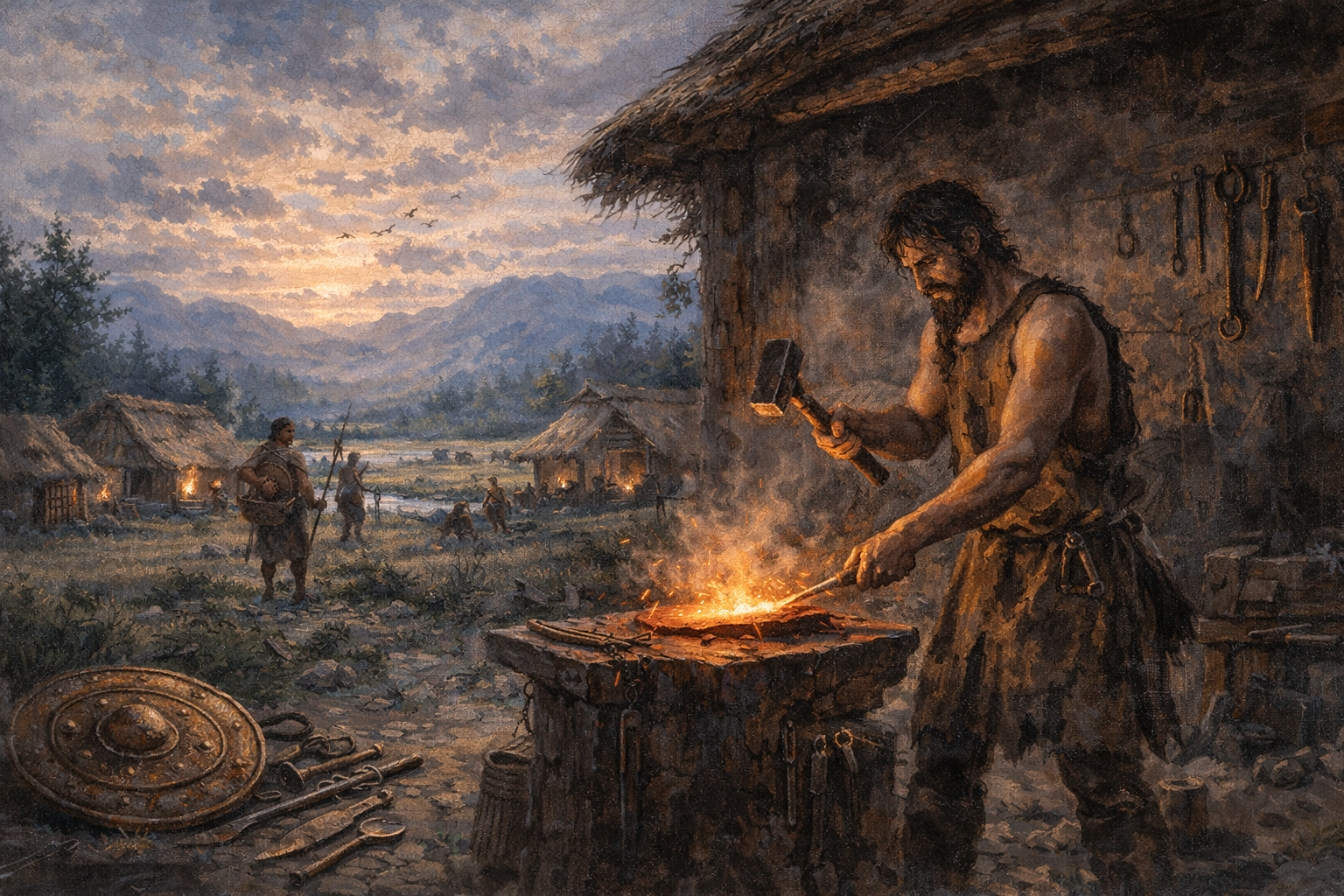
Mastery of fire and alloys gave rise to a new class of craftsmen—almost seen as magicians.
🔍 Zoom – The Art of Fire: blacksmiths and magicians
🧠 Key takeaways
- Transition from bronze (copper + tin alloy) to iron
- Emergence of a warrior elite and strong social inequalities
- Development of European trade networks (tin, amber, wine)
- The tomb of Vix illustrates the power and wealth of the period’s elites
📸 Image credits
- Bronze swords — Calame, CC BY-SA 3.0, via Wikimedia Commons
- Vix Krater — Ismoon, CC BY-SA 4.0, via Wikimedia Commons
- Gold torque — Kleon3, CC BY-SA 4.0, via Wikimedia Commons
- Iron tools — P.poschadel, CC BY-SA 3.0, via Wikimedia Commons
📚 Sources
- National Archaeology Museum (Saint-Germain-en-Laye) – Bronze and Iron Age collections
- Pays Châtillonnais Museum – The Vix Treasure
- INRAP – The Age of Metals in France
- CNRS – Early Celtic societies