

From Caesar’s Conquest to Roman Gaul
p3-50 à 0
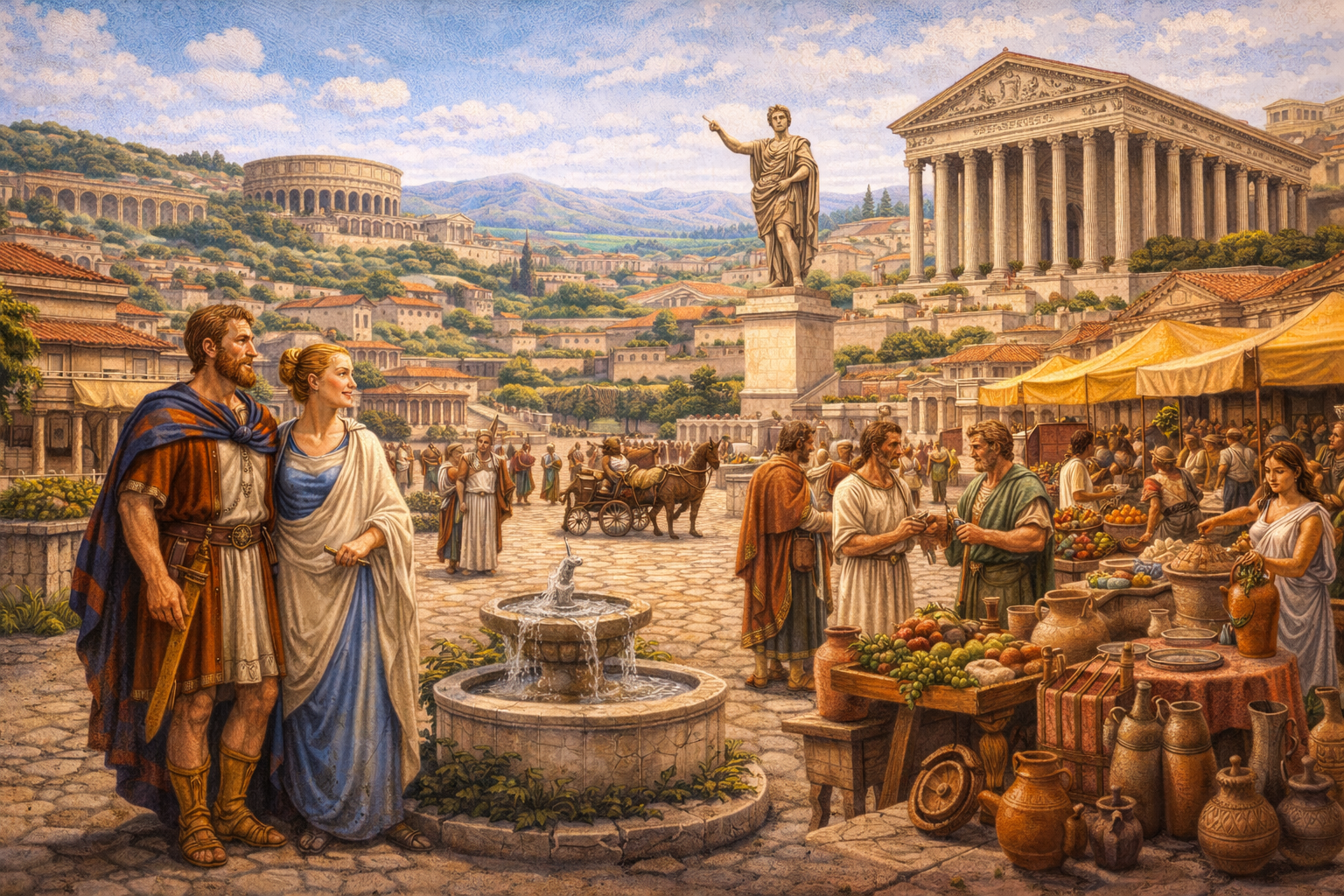
Between 50 BC and AD 0, Gaul undergoes a profound transformation. In just a few decades, it shifts from a mosaic of independent peoples—organised into tribes and rival city‑states—into a region fully integrated into the Roman Empire. This period is not merely a military conquest: it marks a major political, social, and cultural turning point.
Roman domination gradually imposes new structures: administration, urban development, taxation, and new ways of life. Far from disappearing, the old Gallic elites adapt and integrate into the Roman system. A new reality emerges: Gallo‑Roman Gaul.
The end of independent Gaul
Gaul ceases to exist as a collection of independent territories. Large tribal confederations capable of raising significant armies disappear or are dismantled. The oppida, the political and economic centres of the Gauls, gradually lose their central role.
However, domination remains fragile in the first years. Some regions—especially those far from major routes or recently subdued—still experience unrest. Rome must maintain a strong military presence to secure order and prevent any new uprising.
Beyond the military dimension, the conquest transforms local power. Gallic leaders who survive or accept Roman domination sometimes retain influence, but it is now exercised within a framework imposed by Rome. Gradually, a new elite forms, blending Gallic traditions with Roman culture.
The conquest therefore does not represent a sudden rupture, but the beginning of a process of integration. Gaul is no longer independent, but it is not yet fully Roman. It enters a transitional phase, in which older structures still coexist with the first forms of imperial organisation.
Finally, this new situation places Gaul at the heart of Roman political stakes. Rich in resources, manpower, and land, it becomes a strategic territory. Its control greatly strengthens Caesar’s power, helping to trigger tensions with the Senate and other Roman leaders.
Thus, the end of independent Gaul does not close the region’s history. On the contrary, it opens a new phase in which its destiny is now played out at the scale of the Roman world as a whole.
Gaul in the Roman civil war
In 49 BC, Julius Caesar crosses the Rubicon, a river marking the limit of his military command. By doing so, he enters rebellion against the Senate and triggers a civil war against Pompey, supported by much of the Roman aristocracy. This conflict, opposing two visions of power, quickly extends beyond Italy and involves all Roman territories, including recently conquered Gaul.
 Caesar crossing the Rubicon — Source: Wikimedia Commons
For Caesar, Gaul is a major strategic asset. It provides resources, military bases, and above all loyal troops hardened by years of warfare. Control of this territory greatly strengthens his position against his opponents. At the same time, the region’s stability remains essential: any revolt could undermine his war effort.
It is in this context that the episode of Massalia (Marseille) takes place. This city, founded by the Greeks and endowed with a long tradition of autonomy, chooses to support Pompey rather than Caesar. This political choice shows that some cities still retain real decision‑making capacity, despite Roman domination.
Caesar responds swiftly. He besieges the city in 49 BC, entrusting part of the operations to his lieutenants while he continues his campaigns elsewhere. The siege features both land and naval fighting, testifying to the city’s power and organisation. Despite its resistance, Massalia eventually capitulates. It is stripped of its territories and loses political independence, while retaining part of its local institutions.
This episode illustrates an important reality: Gaul is not yet fully integrated. Some cities still possess a strong identity and can attempt to influence events. However, Caesar’s victory greatly reduces these margins of autonomy.
The civil war then continues throughout the Roman world. Caesar wins a series of decisive victories, notably against Pompey, who is ultimately defeated and then assassinated in Egypt. Within a few years, Caesar becomes the uncontested master of Rome.
Yet this domination raises fears among Roman elites, who dread the end of the Republic. In 44 BC, Caesar is assassinated in a conspiracy led by several senators. Far from restoring the old order, this event instead triggers a new period of instability.
For Gaul, these years of civil war have lasting consequences. They accelerate its integration into the Roman system by reinforcing the military and administrative structures established by Caesar. They also show that the region’s fate is now closely tied to power struggles in Rome. Gaul is no longer a peripheral territory: it has become a central element in the balance of the Roman world.
From civil wars to the birth of the Empire
The assassination of Julius Caesar in 44 BC does not put an end to political tensions in Rome. On the contrary, it opens a new phase of conflict between his heirs and former allies. Among them, Octavian, Caesar’s adopted son, gradually emerges as a central figure. Still young and lacking extensive military experience, he nevertheless manages to ally himself with powerful men, notably Mark Antony, one of Caesar’s closest generals.
At first, a compromise is reached with the formation of a second triumvirate bringing together Octavian, Mark Antony, and Lepidus. This alliance aims to eliminate Caesar’s assassins and restore order. The opponents are hunted down and defeated, notably at the Battle of Philippi in 42 BC. However, the arrangement remains fragile and soon turns into rivalry.
Gradually, the Roman world divides into spheres of influence. Octavian controls the West, while Mark Antony dominates the East. Antony settles in Egypt and allies himself with Cleopatra, fuelling suspicion and criticism in Rome. In the eyes of his opponents, Mark Antony appears increasingly as a leader drifting away from Roman traditions.
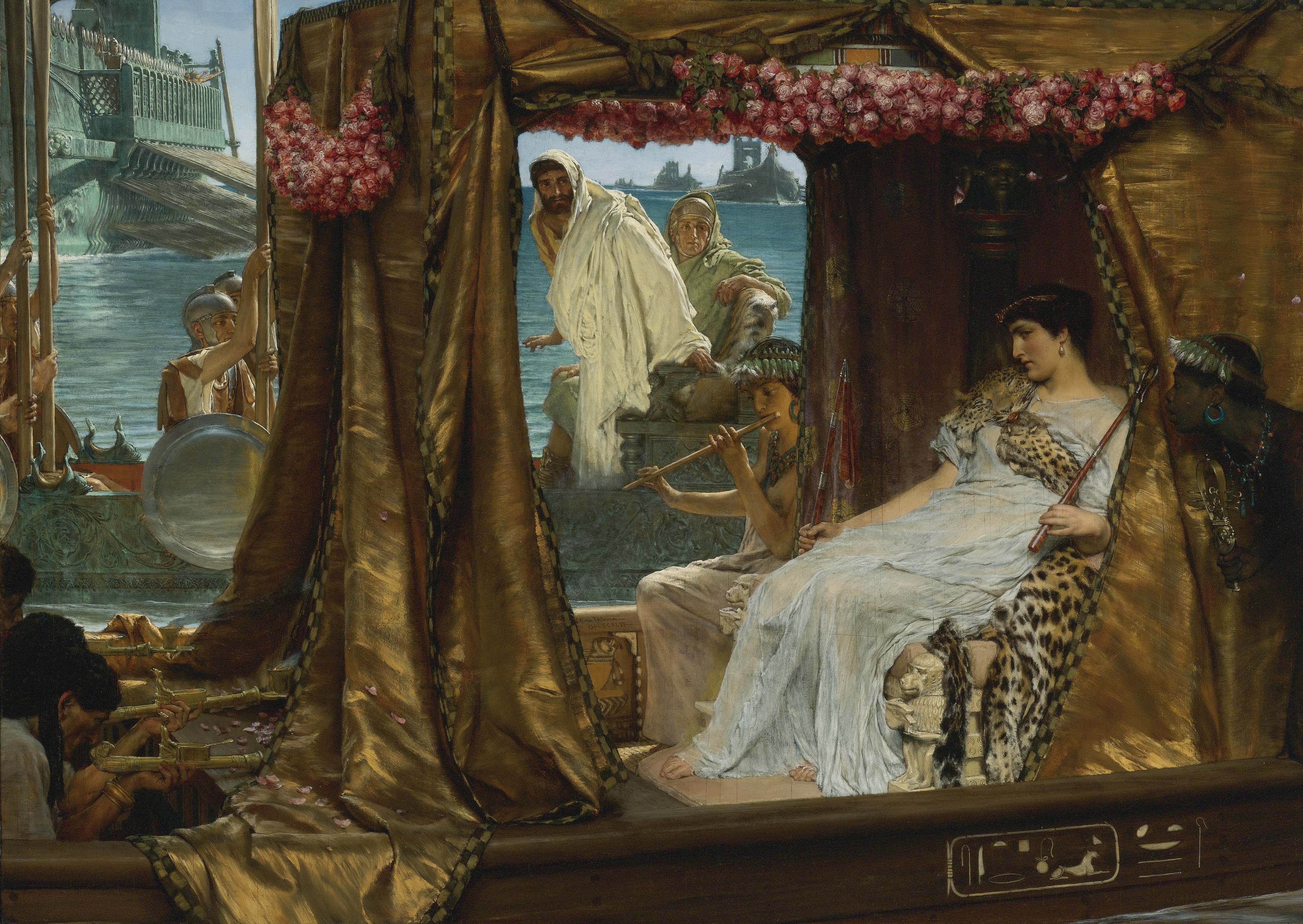 The meeting between Octavian and Mark Antony — Source: Wikimedia Commons
Tension between the two men intensifies until it culminates in a decisive confrontation. In 31 BC, their forces clash at the naval battle of Actium. Octavian’s victory marks a major turning point: Mark Antony and Cleopatra are definitively defeated. The following year, in 30 BC, Octavian takes Alexandria. His opponents take their own lives, ending all organised resistance.
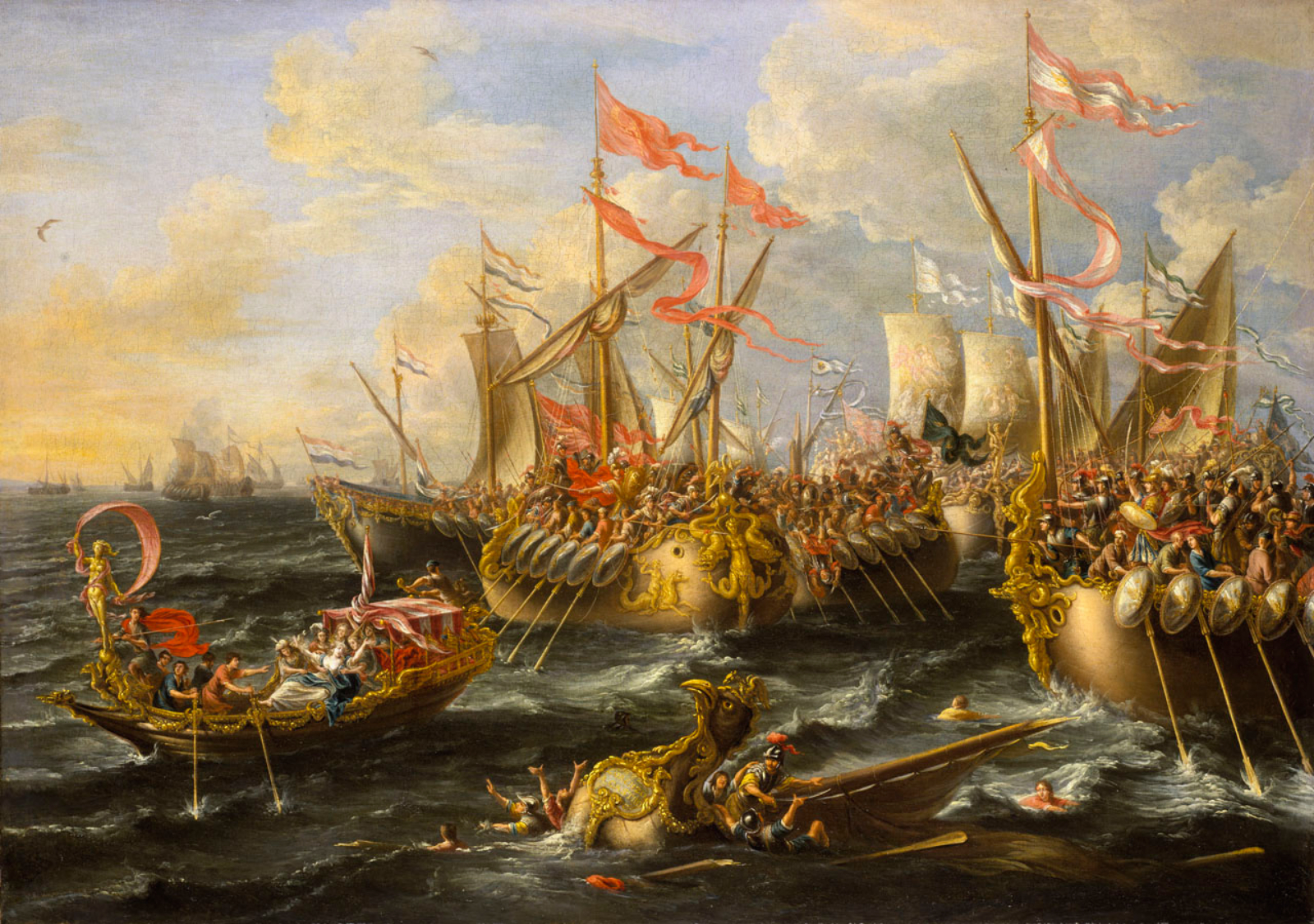 The Battle of Actium — Source: Wikimedia Commons
Octavian then becomes the sole master of the Roman world. Yet he does not openly restore monarchy. In 27 BC, the Senate grants him the title of Augustus and he establishes a new political system often called the Principate. Officially, republican institutions survive, but real power is now concentrated in the hands of a single man.
This transformation marks the end of the Roman Republic and the beginning of the Empire. It also inaugurates a period of relative stability after decades of civil wars.
For Gaul, these events have direct consequences. Located in the West, it comes under Octavian’s control from the earliest years of the conflict. Once peace is restored, it becomes a priority territory for the new imperial power. Its wealth, strategic position, and military role make it an essential element in the Empire’s organisation.
From this point on, Gaul enters a phase of structuring and stabilisation. Administrative structures strengthen, infrastructure develops, and integration into the Roman world accelerates. The time of conquest and civil war gives way to that of imperial construction.
The organisation of the Gauls under Augustus
Under Augustus, Gaul undergoes a deep and lasting reorganisation. After decades of conquest and civil war, imperial power seeks to stabilise the territory and integrate it fully into the Empire’s functioning.
The territory is divided into several provinces with distinct statuses. Gallia Narbonensis, already largely romanised since the 2nd century BC, retains an older and stable organisation. Further north, recently conquered lands are reorganised into three major provinces: Aquitania, Gallia Lugdunensis, and Gallia Belgica. This division enables more efficient administration and better management of populations.
 Gaul under the Roman Empire — Source: Wikimedia Commons
Each province is placed under the authority of a Roman governor responsible for maintaining order, dispensing justice, and supervising taxation. Administration also relies on local elites, who play an essential role in the day‑to‑day management of the cities. This system allows Rome to govern a vast territory without a permanent military presence everywhere.
At the same time, a fiscal organisation takes shape. Taxes become structured and regular, contributing to funding the army and infrastructure. This taxation, though burdensome, is accompanied by relative political and economic stability.
This reorganisation marks a decisive step: Gaul ceases to be a conquered territory and becomes a lasting component of the Roman Empire. It is now integrated into a coherent political whole, with shared rules, institutions, and networks.
Urbanisation and Romanisation
Gaul’s transformation also relies on a vast movement of urbanisation. Cities become the centres of political, economic, and cultural life.
Lugdunum (Lyon) occupies a central place in this system. Founded a few years earlier, the city benefits from an exceptional geographic position at the confluence of the Rhône and the Saône. It quickly becomes the administrative seat for all the Gauls and a major hub of exchange. Its growth is rapid, and it embodies the model of a Roman city in Gaul.
 Model of Reims under the Roman Empire — Source: Wikimedia Commons
Other cities also experience significant development. Some are created from scratch according to a Roman plan, with organised streets, forums, temples, and public amenities. Autun (Augustodunum), founded to replace the oppidum of Bibracte, is an emblematic example. This shift marks the gradual end of older Gallic centres in favour of new urban structures inspired by Rome.
In the south, Nîmes (Nemausus) illustrates another aspect of romanisation. The city receives colonies of Roman army veterans, who are granted land. These former soldiers help spread Roman practices, institutions, and ways of life. Gradually, local populations adopt Latin, urban customs, and Roman forms of organisation.
This process does not mean the total disappearance of Gallic traditions. It is rather a gradual blending in which local and Roman elements coexist and transform each other. From this encounter emerges Gallo‑Roman culture.
Roads and economic integration
Gaul’s integration into the Empire also depends on an efficient communications network. Under the impetus of Agrippa, a close collaborator of Augustus, a vast system of roads is laid out across the territory.
These routes link the major cities to one another and often converge on Lugdunum, which becomes a true circulation hub. They enable rapid movement for armies, but also for administrators, merchants, and travellers.
This network facilitates economic exchange. Agricultural, artisanal, and mining products move more easily, connecting Gaul to other regions of the Empire. Markets expand, cities prosper, and an integrated economy gradually takes shape.
Beyond their practical function, these infrastructures play a symbolic role. They materialise Rome’s presence and contribute to unifying the territory. Thanks to them, Gaul is no longer a set of isolated regions, but a connected space inserted into an empire‑wide network.
Thus, through administration, urbanisation, and infrastructure, Gaul is transformed in depth. It becomes a stable, organised region fully integrated into the Roman Empire, ready to enter a long period of prosperity.
The Rhine: from an unstable frontier to an organised limit of the Empire
Despite Gaul’s gradual pacification after Caesar’s campaigns, the region remains exposed to external threats, especially along the Rhine. This river marks the boundary between the Roman world and territories occupied by Germanic peoples, whose movements and incursions remain difficult to control.
In 18 BC, this fragility becomes clear when several Germanic peoples, notably the Sicambri, cross the Rhine and enter Roman territory. Roman forces under Marcus Lollius suffer a major defeat. A legion is annihilated in what is known as the clades Lolliana. The event shocks Rome and reveals the limits of Roman control on this frontier.
This defeat is a turning point. It shows that, despite past military successes, Gaul is not fully secured. The Rhine is not yet a stable frontier, but a contact zone of tension where hostile incursions remain possible.
In response, Roman power strengthens its military presence and revises strategy. Rather than trying to control Germanic territories directly in a lasting way, Rome chooses to organise a solid defensive line along the river.
From the end of the 1st century BC, the Rhine gradually becomes the Roman Empire’s main northern frontier. Legions are stationed there permanently, and military camps are established at strategic points. This system monitors Germanic movements, enables rapid reaction in case of incursion, and asserts Rome’s long‑term presence.
At the same time, Rome does not abandon all ambitions beyond the Rhine. From Gaul, several campaigns are launched into Germania. Under Drusus, then Tiberius, Roman armies cross the river and advance deep into Germanic territory, as far as the Elbe.
These operations pursue a double objective: push the threat away by keeping hostile groups at a distance, and test the limits of Roman expansion. They also confirm Gaul’s strategic role as a logistical base, a recruitment space, and a starting point for offensives to the north.
Thus, the Rhine is not only a geographic limit. It becomes a true political and military frontier, organised and defended, durably structuring the balance between the Roman world and Germanic territories.
Lyon and the integration of Gallic elites
The consolidation of Roman power in Gaul does not rely solely on military force. It also depends on the gradual integration of local elites into the Empire’s structures.
In 13 BC, this policy takes an institutional form with the creation of the federal sanctuary of the Three Gauls at Lugdunum. Located at the confluence of the Rhône and the Saône, it becomes a major symbolic and political centre for all Gallic provinces.
Each year, representatives of the various Gallic city‑states gather there in a council. This assembly organises the participation of local elites in the Empire’s political life while strengthening ties between Gaul’s different regions.
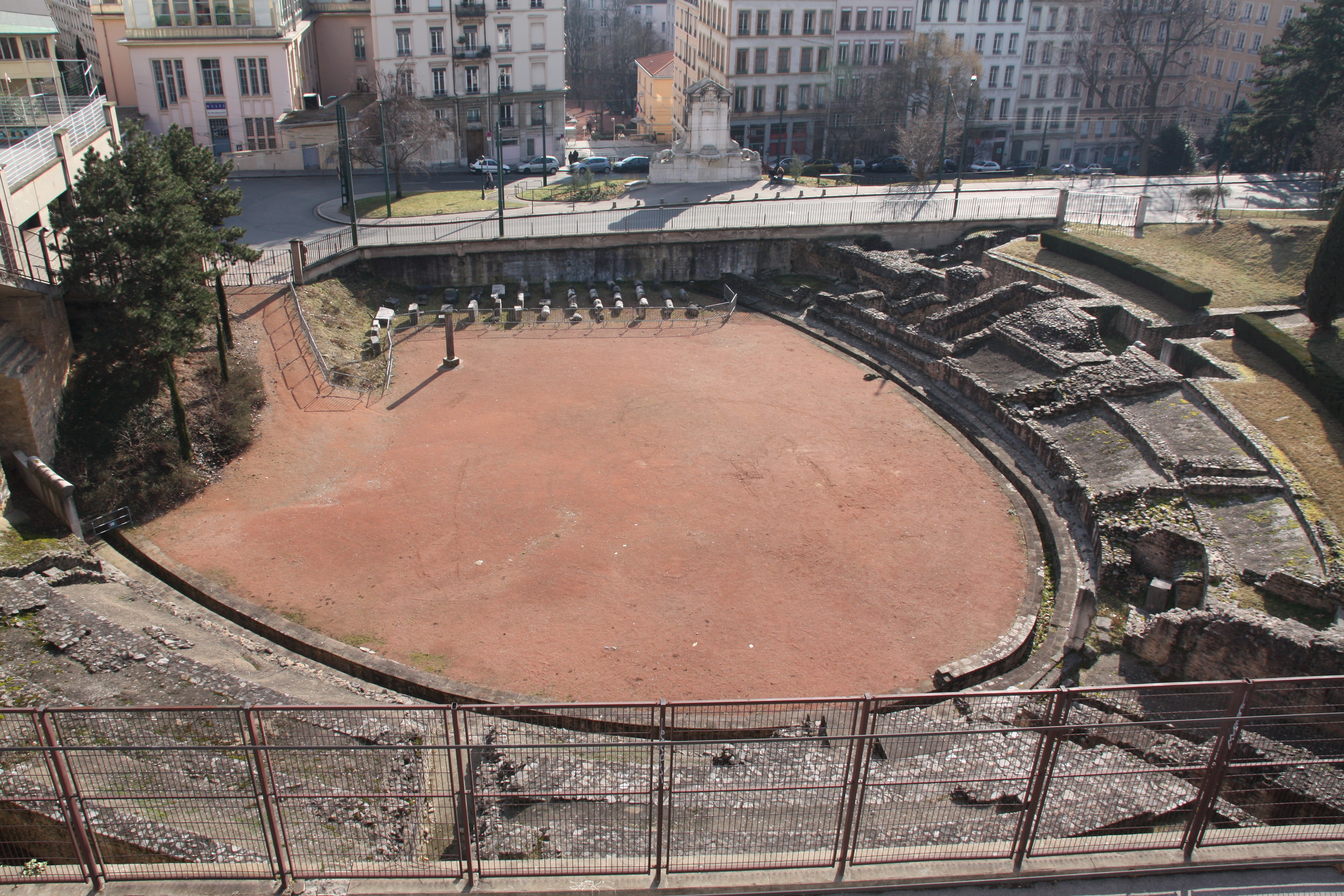 Federal sanctuary of the Three Gauls at Lugdunum — Source: Wikimedia Commons
The sanctuary is also dedicated to the imperial cult centred on Augustus. This cult plays an essential role in integration: by honouring the emperor, Gallic elites demonstrate loyalty to Rome and help spread imperial ideology.
This system enables Rome to govern a vast and diverse territory more effectively. Rather than imposing a purely military domination, it relies on local notables who become intermediaries of imperial power.
Thus, Lugdunum establishes itself not only as an administrative centre, but also as a place of political and cultural convergence. It symbolises the successful integration of Gaul into the Empire and the emergence of a new Gallo‑Roman elite.
Stabilisation and the Pax Romana
As AD 0 approaches, Gaul gradually enters a phase of lasting stabilisation. After decades marked by conquest, revolts, and Roman civil wars, the territory finally experiences relative pacification. Major insurrections have disappeared, and external threats—though still present on the borders—are now contained by a structured military system.
The administration set up under Augustus now functions regularly. The provinces are organised, governors ensure political and judicial management, and taxation is regulated. Taxes, once collected irregularly or exceptionally, become a stable element of the system, financing infrastructure and the army.
The presence of Augustus and his close collaborators in Gaul on several occasions underlines the region’s strategic importance. Serving simultaneously as a production zone, a settlement space, and a military base facing the Rhine, Gaul holds an essential place in the Empire’s balance.
In this context, economic and social life develops. Cities expand, trade intensifies, and populations gradually adapt to Roman structures. Local elites, now integrated into the imperial system, contribute to stabilisation by relaying Rome’s authority.
This period marks the beginning of what historians call the Pax Romana. It is not an absolute peace, but a long phase of relative political and military stability fostering economic, cultural, and urban development. In Gaul, this peace enables the emergence of a new civilisation, blending Gallic heritage and Roman contributions.
Conclusion
Between 50 BC and AD 0, Gaul undergoes a profound and irreversible transformation. In the space of a few decades, it moves from being an independent territory structured around peoples and city‑states to becoming a region integrated into a centralised and organised empire.
This process rests on several complementary dynamics. Military conquest brings an end to traditional Gallic political structures, while Roman civil wars place Gaul at the heart of imperial power struggles. Under Augustus, administrative organisation, infrastructure, and urban growth durably reshape the territory.
At the same time, the integration of local elites and the spread of Roman ways of life foster the emergence of a new society. Gaul does not vanish as an identity, but it is transformed in depth, giving birth to an original Gallo‑Roman culture.
By the end of this period, a new reality asserts itself: Gaul is no longer a peripheral or unstable space, but an essential component of the Roman Empire. Structured, connected, and pacified, it enters a phase of prosperity that will leave a lasting mark on its history.
Image credits
- Caesar crossing the Rubicon: Domenico Ghirlandaio, Public domain, via Wikimedia Commons
- The meeting between Octavian and Mark Antony: Lawrence Alma-Tadema, Public domain, via Wikimedia Commons
- The Battle of Actium: Laureys a Castro, Public domain, via Wikimedia Commons
- Gaul under the Roman Empire: Patotable4, CC BY-SA 4.0 https://creativecommons.org/licenses/by-sa/4.0, via Wikimedia Commons
- Model of Reims under the Roman Empire: Jona Lendering, CC0, via Wikimedia Commons
- Federal sanctuary of the Three Gauls at Lugdunum: User:Otourly, CC BY-SA 3.0 https://creativecommons.org/licenses/by-sa/3.0, via Wikimedia Commons