

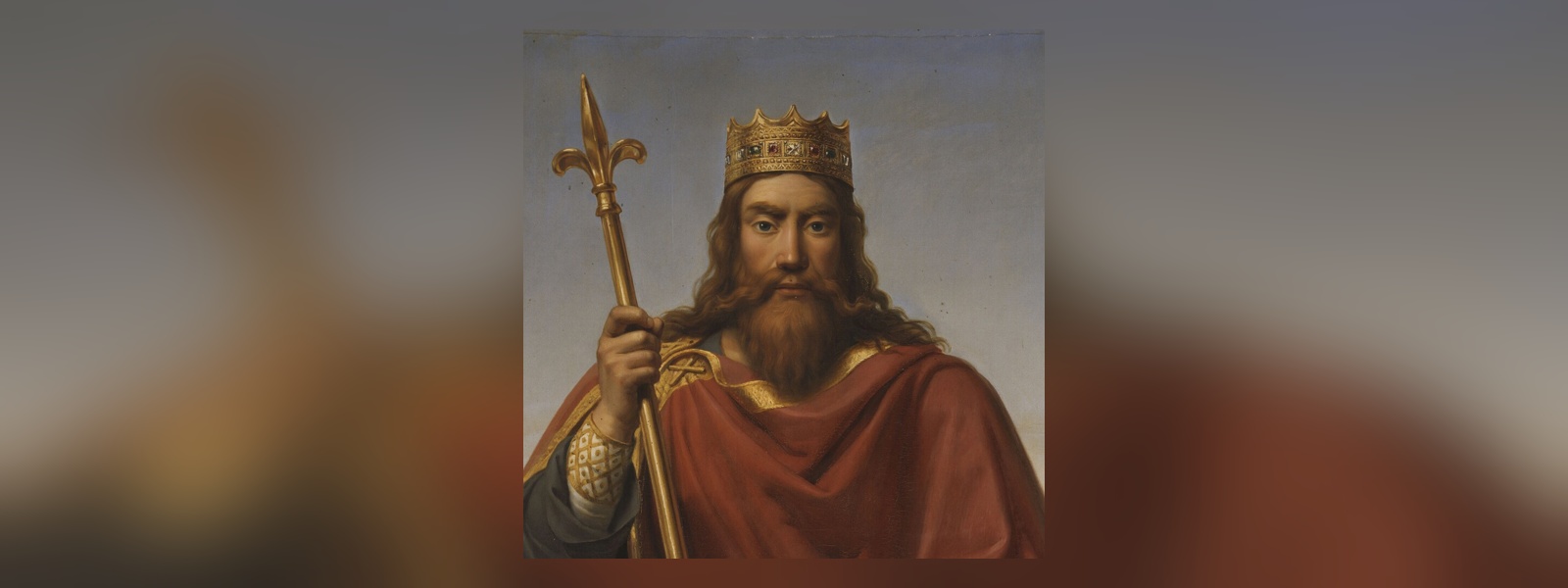
Clovis: The King Who Forged Gaul
p4481 à 511
When Clovis came to power, Gaul was no longer Roman. The Western Roman Empire had collapsed a few years earlier (476), leaving behind a fragmented territory.
 Map of Gaul in 481 — Source: Wikimedia Commons
Gaul had become a mosaic of barbarian kingdoms:
- the Visigoths dominated the Southwest,
- the Burgundians controlled the Rhône valley,
- the Franks were settled in the North,
- and some regions were still ruled by Gallo-Roman leaders, heirs of imperial administration.
Roman cities still survived, but they were now protected and organised by their bishops, who became the central figures of local authority.
In this unstable world, a young Frankish king would gradually turn a small northern kingdom into a dominant power: Clovis.
 Clovis, painting by Riminaldi — Source: Wikimedia Commons
In a few decades, he managed to unite a large part of Gaul under his authority and lay the foundations of a kingdom that would endure for centuries.
⏳ Quick timeline
- 481: Clovis becomes king of the Salian Franks.
- 486: victory at Soissons against Syagrius, last representative of Roman power.
- c. 496: Clovis is baptised and draws closer to the Catholic Church.
- 507: victory at Vouillé against the Visigoths.
- 511: Clovis dies and the kingdom is divided among his sons.
🧬 Where did Clovis come from?
Clovis belonged to the Merovingian dynasty, a line of Frankish kings named after a semi-legendary ancestor: Merovech.
His father, Childeric I, was king of the Salian Franks and an ally of the late Roman Empire. He controlled a region around Tournai and commanded an effective army of Frankish warriors.
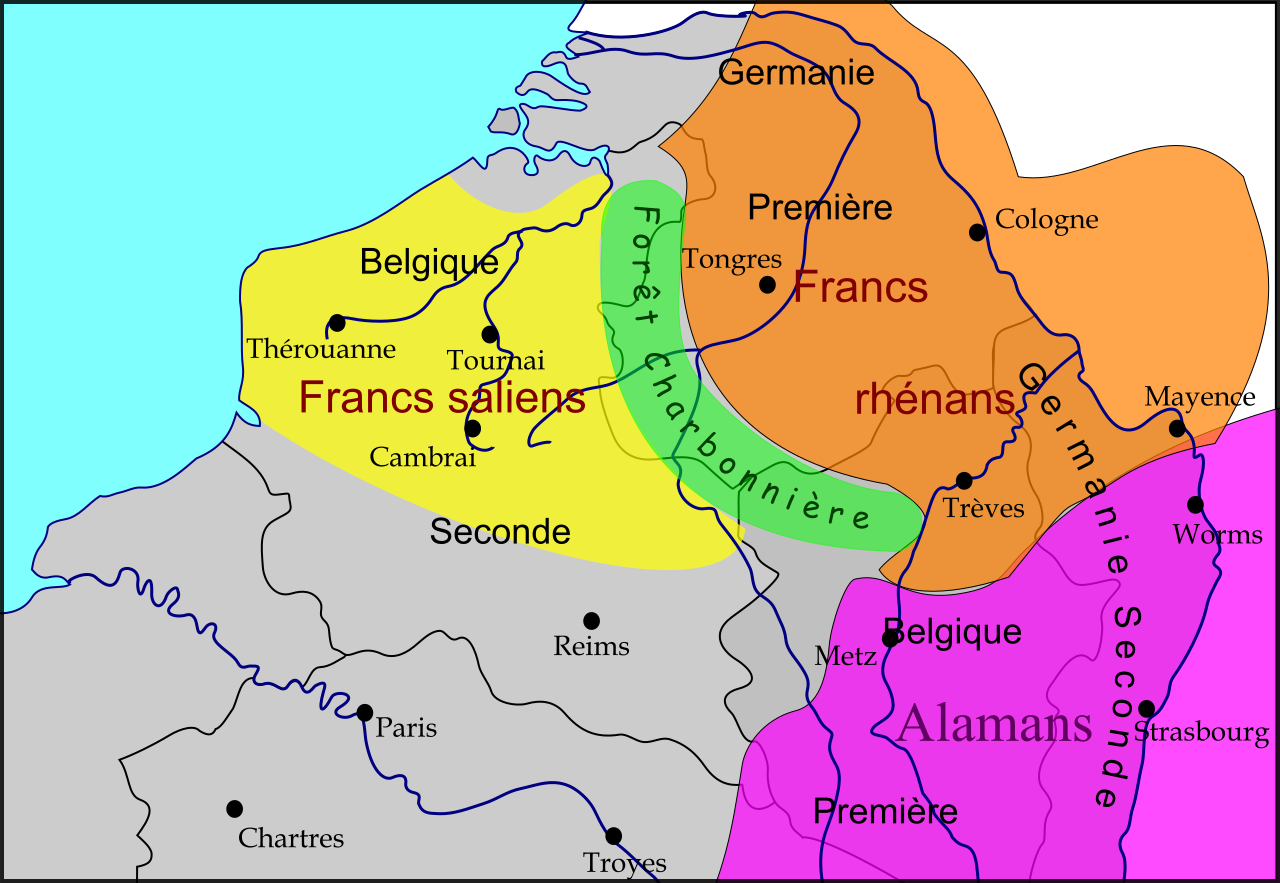 The Franks in Roman Belgium — Source: Wikimedia Commons
When Clovis inherited the throne in 481, he ruled only a limited territory in northern Gaul.
But he had several advantages:
- A loyal, mobile army, made of warriors bound by personal loyalty.
- A strategic position, between Germanic kingdoms and wealthy Gallo-Roman cities.
- Great political ambition, beyond that of other Frankish leaders.
His challenge was immense: governing a population that was largely Gallo-Roman, Christian, and urbanised, very different from Frankish warriors.
His method would be simple but effective:
- Impose himself through war
- Stabilise through alliances and institutions
⚔️ 486: Soissons, the end of the last “Roman”
In 486, Clovis confronted Syagrius, a Gallo-Roman leader who still ruled a territory around Soissons.
Syagrius is often seen as the last representative of Roman power in Gaul.
 Coronation and siege of Soissons — Source: Wikimedia Commons
The battle of Soissons marked a major turning point:
- Clovis won.
- Syagrius fled to the Visigoths but was handed over to Clovis.
- The Frankish kingdom expanded as far as the Loire.
This victory gave Clovis:
- rich cities,
- Roman administrative cadres,
- and the gradual support of local elites.
The message was clear:
a new power was now imposing itself in Gaul.
Gallo-Roman elites understood it was better to cooperate with the Frankish king to preserve order and stability.
🔍 Zoom — The Vase of Soissons: a myth of royal authority
⛪ The decisive choice: alliance with the Church
Clovis’s political genius did not rest only on military conquest.
He quickly understood that the Church was the most stable institution in post-Roman Gaul.
Bishops controlled:
- urban networks,
- literate elites,
- economic resources,
- and moral authority over the population.
Unlike other barbarian kings, often Arian, Clovis drew closer to Catholic Christianity, the religion of the Gallo-Roman majority.
This decision was also influenced by his wife:
Clotilde, a Burgundian Christian princess.
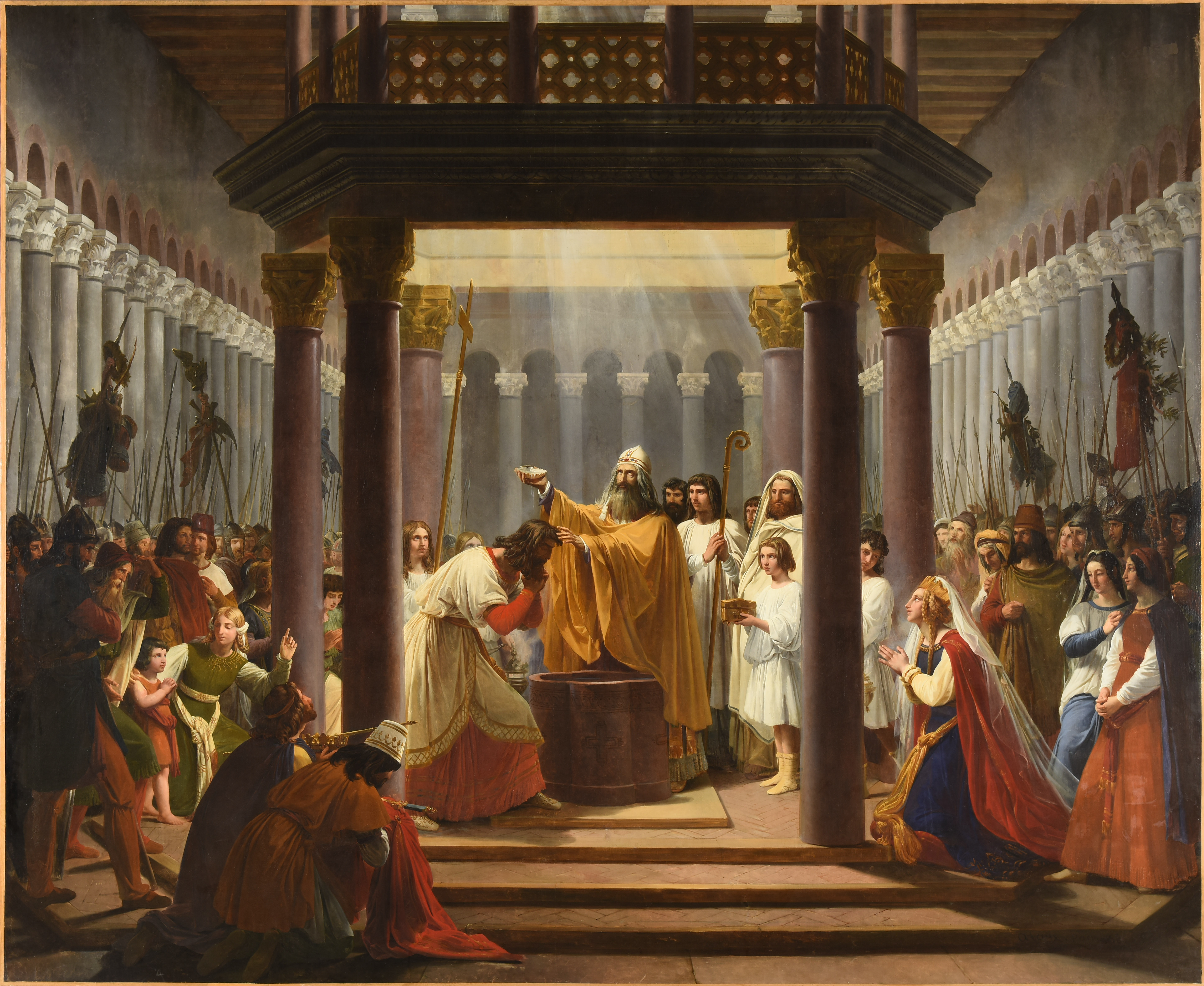 Baptism of Clovis — Source: Wikimedia Commons
His baptism became a founding moment:
- Clovis became the first major barbarian king to adopt the Catholic faith.
- He drew closer to bishops and Gallo-Roman elites.
- He gained new political and religious legitimacy.
This choice would deeply shape the history of the French monarchy.
🔍 Zoom — The baptism of Clovis: a political decision
🏹 Conquer to endure: from Tolbiac to Vouillé
To maintain his authority, Clovis also had to prove he was the most powerful of the barbarian kings.
Tolbiac
Clovis fought the Alamanni, a Germanic people threatening his kingdom’s borders.
 Clovis at the Battle of Tolbiac — Source: Wikimedia Commons
According to the tradition reported by Gregory of Tours, Clovis vowed to convert to Christianity if he won the battle.
The victory at Tolbiac strengthened his military prestige and fuelled the image of a king supported by the Christian God.
🔍 Zoom — Tolbiac: the king’s vow
507: Vouillé, the battle for Aquitaine
Clovis then fought the Visigoths, who dominated the southwest of Gaul.
The battle of Vouillé was decisive:
- the Visigothic king Alaric II was killed,
- the Visigothic army was defeated,
- Clovis seized Aquitaine.
 Clovis kills Alaric II — Source: Wikimedia Commons
This victory brought the Frankish kingdom closer to the great southern cities and greatly increased its prestige.
The Byzantine emperor even recognised Clovis as an honorary consul, a sign of international status.
🔍 Zoom — Vouillé: the battle for Aquitaine
🏛️ Ruling a kingdom: law, cities, legacy
Clovis did not yet create “France” in the modern sense.
But he founded a kingdom that combined Roman heritage and Frankish power.
Roman continuity
Cities, bishops, and some Roman administrative structures continued to exist.
Bishops became essential partners of royal power.
Law
To govern a vast and diverse territory, rules were needed.
It was in this period that some Frankish customs were written down, including the famous:
Salic Law.
It set rules concerning:
- inheritance,
- judicial compensation,
- social organisation.
Paris, centre of power
Clovis chose Paris as his main residence.
The city became a strategic centre for controlling northern Gaul.
It would remain one of the main political centres of the Frankish kingdom.
The price of tradition
At his death in 511, the kingdom was divided among his sons according to Frankish tradition.
This division weakened political unity.
Yet despite these fractures, Clovis’s work endured:
the Frankish kingdom remained the dominant power in Gaul.
🔍 Zoom — Salic Law: rule and kingdom
🧠 Key takeaways
- 481–511: reign of Clovis.
- 486: Soissons, end of the last Roman power in the North.
- Decisive alliance: the Church became a partner of Frankish power.
- 507: victory at Vouillé against the Visigoths.
- Legacy: a vast and powerful kingdom — but divided among heirs.
Clovis did not yet found France,
but he created the kingdom that would become its matrix.
📸 Image credits
- Portrait of Clovis — François-Louis Dejuinne, Public domain, via Wikimedia Commons
- Map of Gaul — Romain0, Public domain, via Wikimedia Commons
- Clovis, king of the Salian Franks — Orazio Riminaldi, Public domain, via Wikimedia Commons
- The Franks in Roman Belgium — Odejea, CC BY-SA 3.0 https://creativecommons.org/licenses/by-sa/3.0, via Wikimedia Commons
- Coronation and siege of Soissons — Garitan, CC BY-SA 3.0 https://creativecommons.org/licenses/by-sa/3.0, via Wikimedia Commons
- Baptism of Clovis — Jean Alaux, Public domain, via Wikimedia Commons
- Clovis at the Battle of Tolbiac — Octave Tassaert, CC BY-SA 3.0 https://creativecommons.org/licenses/by-sa/3.0, via Wikimedia Commons
- Clovis kills Alaric II — http://www.bnf.fr Public domain, via Wikimedia Commons