

The Birth of the Gaulish World
p2≈ –500 à –400 av. J.-C.
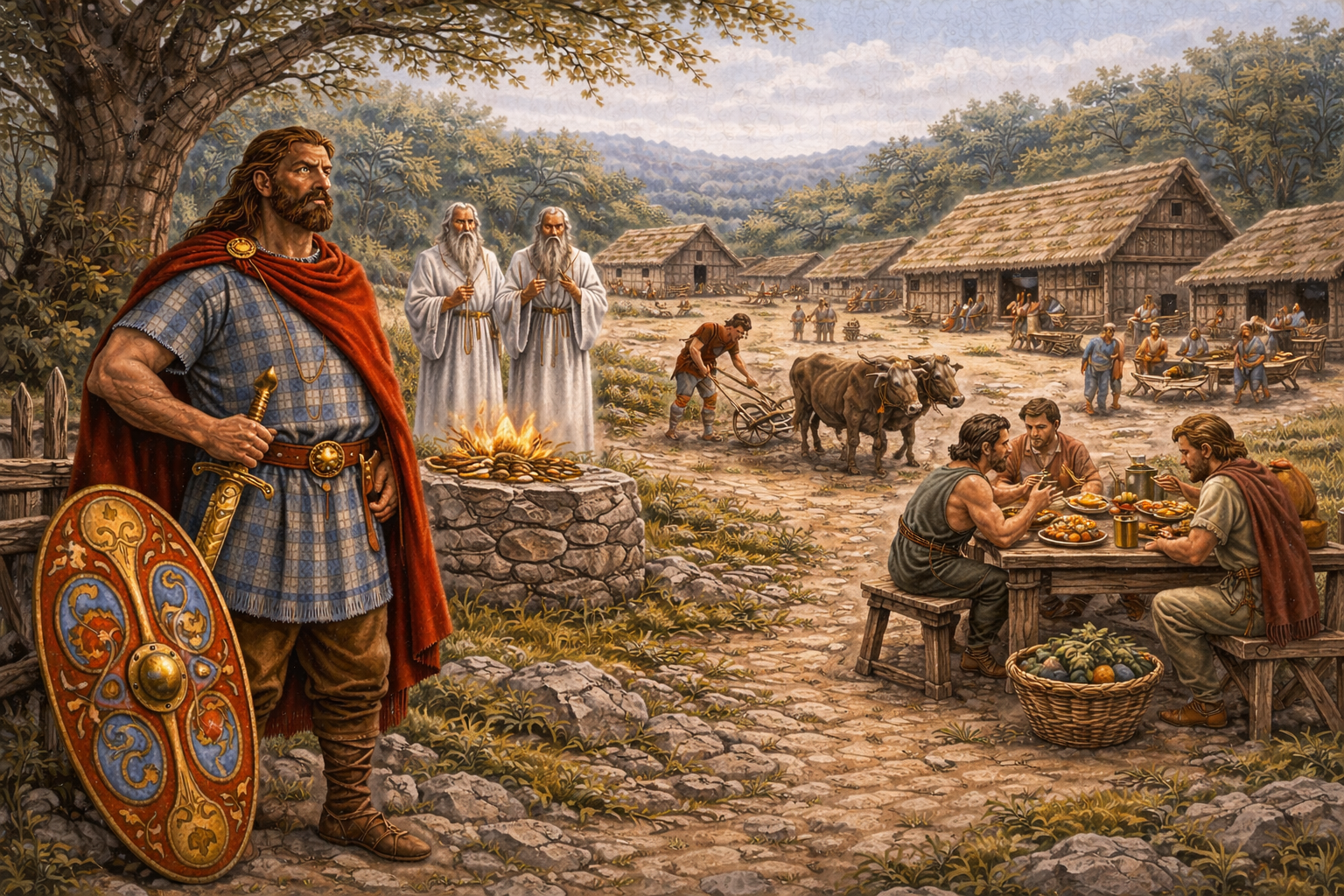
At the turn of the 5th century BCE, a new world emerged in Western Europe.
On the territory of what would become France, Celtic societies underwent profound transformations.
This was not yet “Gaul” as the Romans would later know it… but its foundations were now being laid.
A unique, dynamic, and interconnected civilization was taking shape.
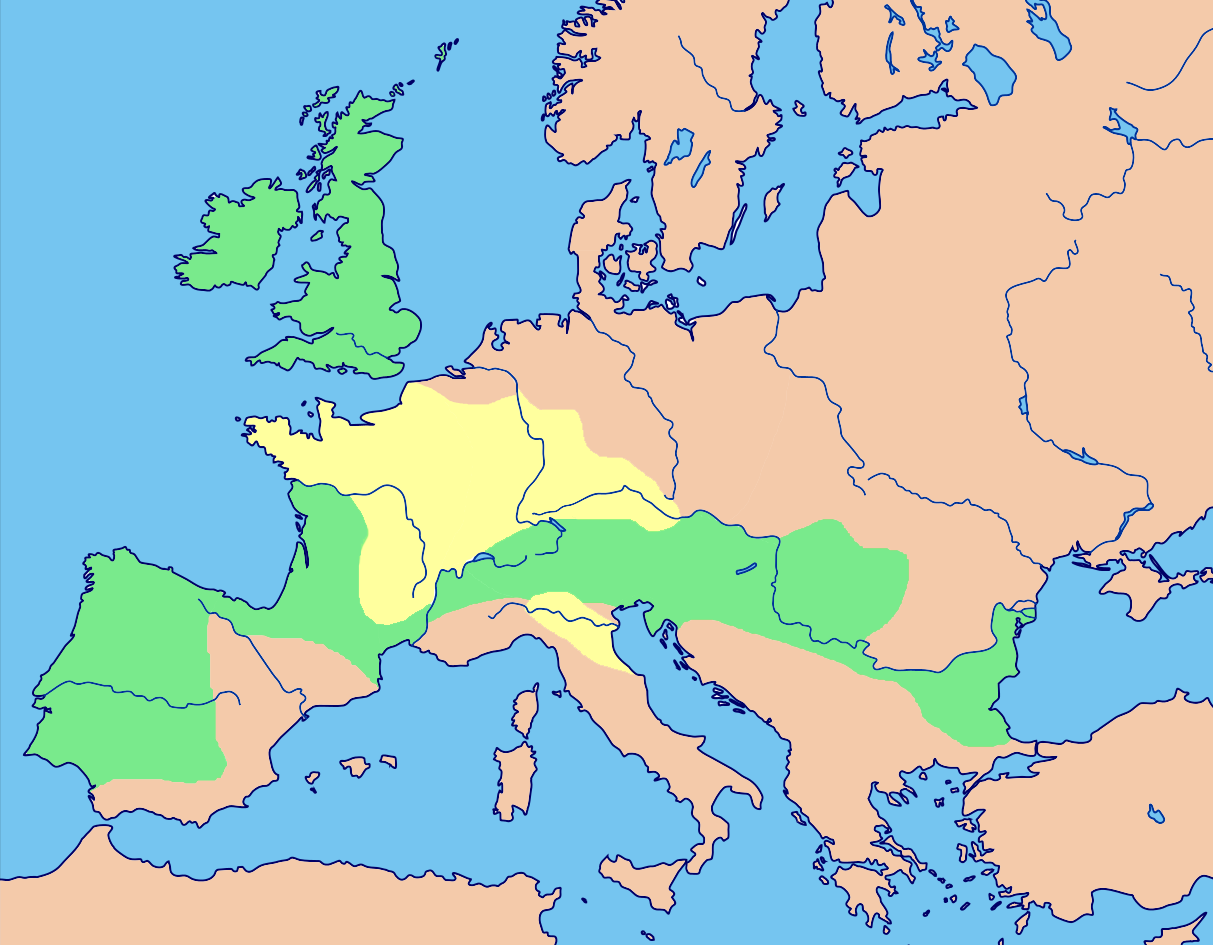
Distribution of the La Tène culture – Source: Wikimedia Commons
🔄 From Hallstatt to La Tène: a major transformation
Around 480–450 BCE, a new culture emerged: the La Tène culture.
It gradually replaced the older Hallstatt culture.
This transition marked a deep transformation:
- more elaborate art, with curves and complex patterns
- improved mastery of iron
- a more dynamic and outward-looking society
The Celtic world became more identifiable, more cohesive… and more influential.

Reconstruction of La Tène houses – Source: Wikimedia Commons
🧭 A shifting center of gravity
At the same time, the heart of the Celtic world shifted.
While the Rhône valley had previously played a key role, it gradually lost influence.
New regions became central:
- Champagne
- the Ardennes
- the valleys of the Moselle and the Saar
These areas became hubs for:
- emerging elites
- iron metallurgy
- trade networks
Future Gaul was taking shape… but not necessarily where one might expect.
⚓ Massalia: a gateway to the Mediterranean
In the south, one city played a decisive role: Massalia (Marseille).
Founded by the Greeks, it became a major trading hub.
It connected the Celtic world to the Mediterranean:
- import of Greek wine
- circulation of coins and luxury goods
- spread of advanced commercial practices
The Auriol treasure, buried around 460 BCE, illustrates these intense exchanges. This hoard of 2,130 small silver coins was hidden in a gray clay vessel buried beneath a large flat stone.
Southern Gaul was not isolated—it was already deeply integrated into international networks.
👑 The rise of Gaulish elites
In this changing world, a new elite emerged.
These were powerful leaders capable of:
- controlling trade
- accumulating wealth
- asserting authority through warfare
Their prestige was based on:
- high-quality weapons
- imported goods (Greek, Etruscan)
- impressive funerary rituals
Power was no longer based solely on strength:
it also depended on wealth and networks.
🌍 A connected and mobile Gaul
Contrary to the image of an isolated world, Gaul was already a crossroads of exchange.
Trade routes crossed the territory:
- from the north (Baltic amber)
- to the south (Mediterranean wine)
- from the west (tin) to the east
Rivers became essential routes:
- Rhône
- Loire
- Seine
👉 Long before Rome, Gaul was already integrated into a European economic system.
But exchanges were not limited to goods.
People themselves were moving.
From the 5th century BCE onward, Celtic peoples did not remain static.
They formed a dynamic world, with some communities migrating:
- southward (Italy)
- eastward (Balkans)
- westward (Iberia)
Some groups linked to Gaul, such as the Lingones, took part in these movements and settled in northern Italy.
These migrations were gradual, involving contacts, exchanges, and sometimes conflicts.
👉 The Celtic world extended far beyond Gaul.
🌍 A Gaul at the heart of the Celtic world
These movements reveal a key reality:
Gaul was not a periphery,
but a core region of the Celtic world.
From this area spread:
- technical knowledge (metallurgy, craftsmanship)
- artistic styles
- forms of social organization
Gaul thus became a major cultural center, connected to a vast area stretching from the Atlantic to Central Europe.
⚔️ A powerful world… but without unity
Despite these developments, Gaul remained deeply fragmented.
There was:
- no state
- no unified kingdom
- no central authority
The territory was divided into independent tribes, often rivals.
Conflicts were frequent, alliances unstable.
👉 Each leader sought dominance… without ever unifying the whole.
This fragmentation was not a minor detail:
👉 it was the great weakness of the Gaulish world.
It would later prevent the Gauls from resisting a highly organized power like Rome.
🔍 Key takeaways
- The 5th century BCE marks the birth of the Gaulish world
- The La Tène culture deeply transformed Celtic societies
- The center of gravity shifted toward northeastern Gaul
- Massalia played a key role in Mediterranean connections
- A powerful elite emerged, based on wealth and trade
- Gaul was connected… but politically fragmented
✨ Conclusion
Gaul did not suddenly appear in history.
It was built gradually, through invisible but decisive transformations.
By the end of the 5th century BCE, everything was in place:
- a shared culture
- powerful elites
- trade networks
Powerful, connected, expanding…
yet deeply divided.
And it is this contradiction that would shape its entire history.
📸 Image credits
- Reconstruction of La Tène houses, Archeologia Żywa, CC BY 3.0 https://creativecommons.org/licenses/by/3.0
- Distribution of the La Tène culture, Jozefsu, CC BY-SA 4.0 https://creativecommons.org/licenses/by-sa/4.0