

The Gallic Empire: Why Did Independence Fail?
p33rd Century: Crisis and the First Bishops · FROM 50 BC TO THE FALL OF ROME
Between AD 260 and 274, Gaul lived as a sovereign state. Yet this unique experiment ended abruptly. Why?
🗡️ Internal instability: the Roman disease
Even separated from Rome, Gaul kept Rome’s political flaws.
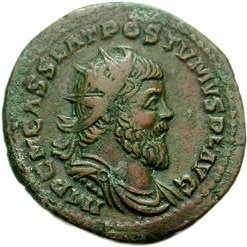
- The assassination of Postumus (269): the founder of the Gallic Empire was killed by his own soldiers after he forbade them from looting Mainz once it had been retaken from a rebel.
Double sestertius of Postumus, first emperor of the Gauls.
- A carousel of emperors: after him, leaders followed one another quickly (Victorinus, Tetricus), weakening authority and cohesion.
☀️ Aurelian: “Restorer of the World”
In 270, an energetic emperor came to power in Rome: Aurelian. His goal was simple: take back everything that had been lost.
- Reunification: after defeating Queen Zenobia in the East, he turned to the West.
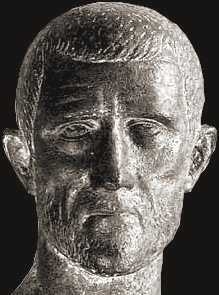 Bust attributed to Emperor Aurelian (or Claudius II), the reunifier of the Empire.
- The Battle of Châlons (274): Aurelian’s Roman armies faced Tetricus’s Gallic troops. The fighting was fierce, but Tetricus — aware of his weakness — eventually surrendered.
 Quinarius of Tetricus I, last emperor of the Gallic Empire.
🏛️ Back in line
The Gallic Empire disappeared, but it left lasting traces:
- Amnesty: Aurelian acted intelligently. He did not punish the Gauls; he reintegrated them into the Empire. Tetricus even ended his life as a high official in Italy.
- The lesson: the episode proved Gaul was the economic and military heart of the West. Rome learned it could no longer neglect this province without risking another secession.
🧠 Key takeaways
- Internal quarrels: assassinations and rivalries among Gallic generals.
- Aurelian: the Roman emperor who reconquered Gaul by force.
- AD 274: end of the Gallic Empire.
- Outcome: Gaul became Roman again, but it had shown its power.
📸 Image credits
- Coin of Postumus — Classical Numismatic Group, Inc. http://www.cngcoins.com, CC BY-SA 3.0, via Wikimedia Commons
- Bust of Emperor Aurelian — Lotho2., CC BY-SA 3.0, via Wikimedia Commons
- Coin of Tetricus — Coin Archives, CC0, via Wikimedia Commons
